 CannaGLAP
Fungus Gnats in Cannabis: Signs and Treatments
Small dark flies are hovering around your soil, and you want them gone. The adults are mostly a nuisance, but their larvae eat roots. The good news is that drying out the topsoil often ends the whole problem.

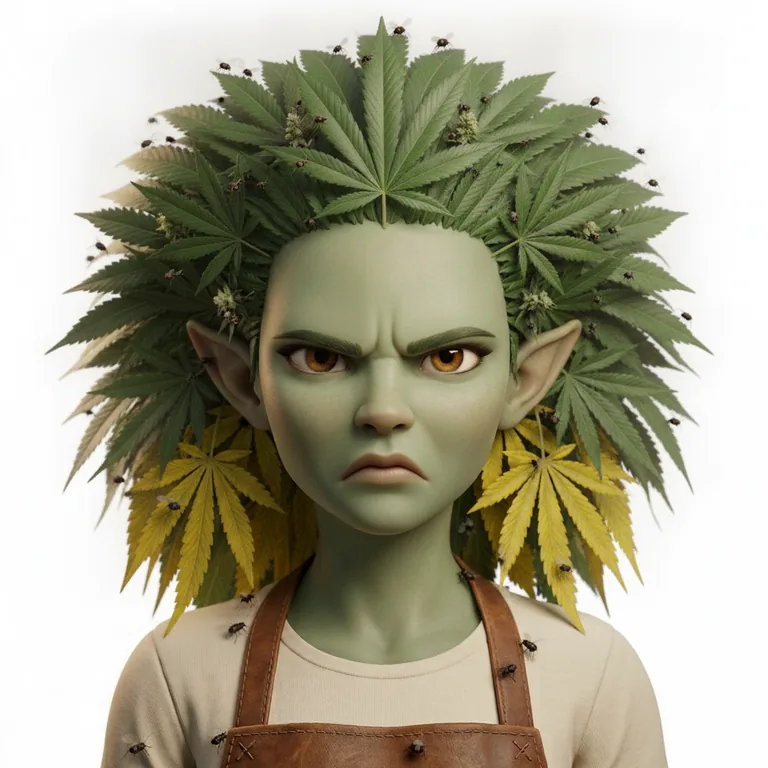
“Tiny flies doing laps around my soil. Let my topsoil dry, and they are out!”
Where it shows
Flying around the medium surface, not the canopy.
What it looks like
Small dark flies hovering at soil level. The adults are harmless; the larvae eat roots, so lower growth yellows and stunts.
How to confirm it
- Small dark flies hovering at soil level, not the canopy.
- Flies rise when you water or disturb the soil.
- Lower leaves may yellow and growth may stunt from root damage.
- Tiny clear larvae can be seen in the top layer of wet soil.
- Yellow sticky traps fill quickly.
Why it happens
Permanently damp medium surface. They breed in wet topsoil, which makes them a symptom of overwatering as much as a pest in their own right.
- A topsoil surface that stays damp all the time.
- Overwatering, which makes them a symptom as much as a pest.
- Organic matter rich soil with poor drainage.
- Bringing in infested bags of soil.
How to fix it
- Let the top inch dry between waterings. This alone usually ends it.
- Yellow sticky traps for the adults; the larvae are the ones doing damage.
- Neem seed meal in the medium suppresses the larvae.
- Let the top inch dry between waterings. This alone usually ends it.
- Put up yellow sticky traps for the adults.
- Treat the larvae, since they do the damage.
- Bottom water if possible, so the top stays dry.
- Mix neem seed meal into the medium to suppress larvae.
Organic options
BTi (Bacillus thuringiensis israelensis)
Kills gnat larvae in the soil. Water it in following the label. Commonly OMRI listed and safe for plants.
Neem seed meal
Mix into the top layer of soil to suppress larvae. It is a soil amendment, not a spray, so it is fine in flower.
Hypoaspis (Stratiolaelaps) mites
Soil predators that eat larvae. Release onto the soil surface.
Beneficial nematodes
Steinernema feltiae targets larvae. Water into moist soil and follow storage directions.
Sand top layer
A thin layer of sand on top of soil makes it hard for adults to lay eggs.
Read and follow every product label. Organic friendly does not mean certified organic; check the listing if that matters to you.
Veg or flower?
Gnats are most harmful to seedlings and young plants with small root systems. Soil treatments are fine in flower since nothing touches the buds.
Prevent it next time
- Water less often and let the top dry.
- Use well-draining soil.
- Keep sticky traps up as an early warning.
- Store soil bags sealed.
Questions growers ask
Do fungus gnats harm cannabis?
The adults are harmless, but larvae eat roots. Heavy infestations can yellow and stunt plants, especially seedlings.
What is the fastest way to get rid of fungus gnats?
Let the top inch of soil dry and use BTi on the larvae. Sticky traps help catch adults.
Are fungus gnats a sign of overwatering?
Usually, yes. They breed in wet topsoil, so a damp surface is the main cause.
Where these figures come from
These points match published grow books, page by page. They are grower practice, not research: none of these books cites a study, so where science and the books differ, this page follows the science.
- Permanently damp topsoil; a symptom of overwatering. Danko (2018), e-book p. 131 to 132. Paull and Zetta (2020), e-book p. 127 to 128.
- Let the top inch dry between waterings; this alone usually ends it. Paull and Zetta (2020), e-book p. 50. Danko (2018), e-book p. 27.
- Yellow sticky traps for the adults. Danko (2018), e-book p. 131 to 132. Paull and Zetta (2020), e-book p. 141 to 144.
- Small dark flies at soil level; larvae eat roots. Danko (2018), e-book p. 131 to 132.
- BTi kills gnat larvae; water it in. Danko (2018), e-book p. 131 to 132.
- Bottom water so the top stays dry. Danko (2018), e-book p. 132.
Books: Danko, Cannabis: A Beginner's Guide to Growing Marijuana (Hampton Roads, 2018); Green, The Cannabis Grow Bible (4th ed., 2001); Paull and Zetta, Foolproof Guide to Growing Cannabis (2020) and The Cannabis Grow Bible (2020).
Related problems
 OverwateredThe whole plant droops.
 Root rotThe whole plant, as an unexplained decline.
 ThripsUpper leaf surfaces.
Updated 2026-10-20. Written by the Canna GLAP team.